
Located south of Kyoto, Fushimi Inari Taisha is a must-see for anyone wishing to discover Japanese culture. Walking along its paths lined with thousands of iconic red torii gates, climbing the sacred Inari mountain, and soaking up its unique atmosphere, one quickly understands why this place is so captivating. The ascent reveals numerous small shrines and fox statues, symbols of the site, which add a mysterious dimension to each step of the journey.
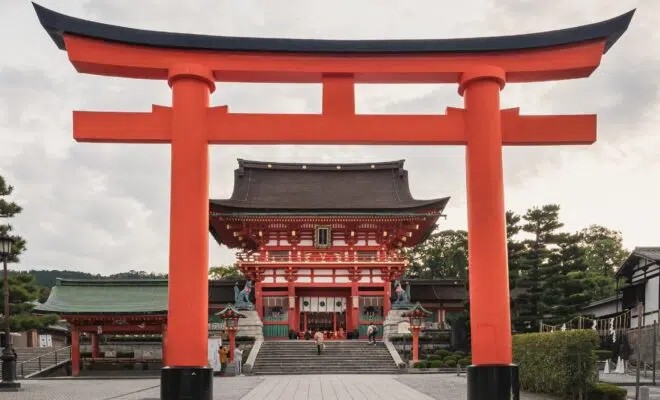
Why choose to visit the red shrines of Fushimi Inari?
From the majestic first gate to the final step leading to the mountaintop, every moment spent here holds surprises. This Shinto shrine, dedicated to the goddess of rice, is distinguished by its architectural beauty and the strength of its ancient traditions. It remains a vibrant place, frequented by locals who come to pray as well as travelers eager to immerse themselves in authentic spirituality.
By choosing to visit this iconic Kyoto site, you are literally immersed in the history of Shintoism and Japanese agrarian rituals. Passing under the countless red torii gates symbolically marks the passage to the sacred, while the paths wind through the forest, revealing an ever more intimate atmosphere as you climb Mount Inari.
Walking under a thousand red torii gates: a sensory experience
It’s impossible to remain unmoved by this hypnotic succession of red torii gates stretching for several kilometers. Walking beneath these colorful arches provides a unique, almost magical sensation. With each step, the light plays with the painted wood, creating ever-changing scenes throughout the day and a captivating atmosphere
The striking visual effect of these passageways offers ideal perspectives for taking unique and colorful photos. Photography enthusiasts will find it a paradise, capturing the captivating contrast between the lush vegetation and the vibrant red of the structures. This blend of color, spirituality, and nature makes Fushimi Inari a must-see for anyone visiting Kyoto.
Exploring the sacred Inari mountain: routes and discoveries
Making your way to the summit: a route accessible to all
One of the area’s charms lies in the possibility of climbing the sacred Inari mountain without major difficulty. The main path winds gently, marked by natural steps and rest areas. Allow two to three hours to complete the entire circuit, including breaks.
As you progress, the atmosphere transforms. The higher you climb, the more the crowds thin out, giving way to the tranquility and magic of the shrine. Some prefer to stop after the first third of the route, which is already very impressive, but the more adventurous will be rewarded with an exceptional panoramic view of Kyoto.
Diversity of small sanctuaries and the mystery of foxes
Along the route, you’ll discover a multitude of small Shinto shrines, ancient stelae, and statues of foxes, traditional messengers of the rice goddess. Each of these nooks tells a different story, sometimes linked to local legends, sometimes to specific religious practices.
A careful observation of these details reveals the full richness of Japanese folklore. The interplay of light filtering through the red torii gates accentuates the impression of traveling between two worlds, oscillating between reality and imagination, and reinforces the mystical dimension of the place.
Planning your visit: practical tips and useful addresses
Visiting hours and accessibility of the sanctuary
To fully enjoy Fushimi Inari, it’s best to arrive early in the morning or late in the afternoon. These visiting times allow you to avoid the crowds and savor the tranquility of the site. Open 24 hours a day, the shrine offers great flexibility to its visitors, who can adapt their visit to suit their preferences.
Easily accessible from central Kyoto thanks to nearby public transport, the Shinto shrine offers completely free entry. Along the way, purifying fountains, benches, and a few shops provide welcome rest stops before continuing the climb.
Take photos and respect the spirituality of the place.
The site naturally attracts photography enthusiasts eager to capture the magic of the red torii gates and the unique fox statues. However, it’s important to remember the sacred nature of the place. Speaking softly, avoiding touching religious objects, and respecting areas of contemplation are essential rules for preserving the harmony of the site.
Certain spaces are particularly conducive to silent contemplation. Taking the time to appreciate the beauty and serenity of the sanctuary fosters a memorable experience, where spirituality takes on its full meaning, far from the tourist bustle.
Everything you shouldn’t miss during your visit to Fushimi Inari
Beyond the famous walk under the thousands of red torii gates, the sanctuary is full of treasures to discover. Every turn holds its share of surprises, from moments of meditation to wonder at the surrounding nature.
- The main esplanade is perfect for observing traditional ceremonies and processions in ancient costumes.
- The less frequented side paths lead to secret clearings sheltering hidden altars and moss-covered lanterns.
- The steady climb up the steps, bathed in silence and punctuated by the discreet song of forest birds.
- The kiosks where you can buy lucky charms or votive plaques in the shape of a torii or a fox, to write a personal wish.
- The diversity of motifs sculpted on the guardian statues, each telling a facet of local history.
Each section of the route sparks curiosity. Whether venturing onto the most remote paths or stopping before an offering, visiting Fushimi Inari allows one to grasp the central importance of the Shinto shrine in the cultural and spiritual life of Kyoto.
Enjoy the unique atmosphere of Fushimi Inari to the fullest
Despite its popularity, the vastness of Fushimi Inari and the variety of routes allow everyone to create their own unique experience. Strolling beneath the red torii gates at sunrise, when mist envelops the base of the sacred mountain, lends the place an almost legendary aura. As evening falls, the golden light further enhances the vermilion archways.
Far more than just a tourist attraction, Fushimi Inari captivates with its balance of tradition and modernity, contemplation and vibrancy. Whether you seek inner peace, photographic inspiration, or simply the pleasure of walking in an exceptional setting, leaving Kyoto without exploring this iconic shrine would inevitably leave you with a feeling of incompleteness.

